
OEM Brake Calipers
OEM Brake Calipers That Clamp Square, Release Clean, and Fit the First Time
The short answer: if a caliper is leaking fluid, sticking, or pulling the vehicle to one side, replace it with the genuine part built for your vehicle’s brake package. Big 3 Auto Parts carries OEM calipers from Motorcraft for Ford, Mopar for Chrysler, Dodge, Jeep, and Ram, and GM for Chevrolet and GMC. Shop by VIN or by year, make, model, and trim so the piston size, mounting, and parking brake design match what left the factory, and we will ship it anywhere in the country.
Is Your Caliper Failing? Start With the Symptoms
Most caliper problems show up as a change in how the vehicle stops, sounds, or smells. Before you buy anything, match what you are experiencing to the table below.
| What You Notice | Possible Caliper Cause | Next Step |
|---|---|---|
| Vehicle pulls left or right when braking | A seized piston or stuck slide pin on one side | Compare pad wear side to side; inspect pins and piston |
| Vehicle drifts or drags when coasting | Caliper not releasing after the pedal is let up | Check wheel temperature after a short drive; inspect caliper and hose |
| Burning smell or smoke from one wheel | Pads dragging on the rotor from a stuck caliper | Stop and let it cool; do not continue driving long distances |
| Wet residue on the inside of the wheel or tire | Leaking piston seal or bleeder screw | Replace the caliper; check fluid level |
| Soft or sinking brake pedal | Internal or external fluid leak, or air in the system | Inspect all calipers and lines; do not drive if the pedal is low |
| One pad worn far more than the other on the same wheel | Sticking slide pin on a floating caliper | Service or replace the pins and bracket, or the caliper |
| Clunk or rattle over bumps | Missing anti-rattle hardware or loose mounting bolts | Inspect hardware and torque bolts to specification |
| Parking brake warning light or message | Electric parking brake motor or caliper fault | Scan for codes; follow the service procedure |
A dragging caliper is not just annoying. It overheats the pads and brake rotors, wastes fuel, and can boil brake fluid, which may lead to a sudden loss of braking. Treat these symptoms as urgent.
The Caliper Explained
A brake caliper is the hydraulic clamp that sits over the rotor. When you press the pedal, the master cylinder sends pressurized brake fluid through the lines to the caliper. That fluid pushes one or more pistons outward, which press the brake pads against both faces of the rotor. When you release the pedal, the square-cut piston seal flexes back slightly and retracts the piston just enough to let the pads relax. That small, carefully engineered retraction is why a healthy caliper does not drag.
Floating Calipers
A floating (or sliding) caliper has pistons on the inboard side only. The caliper body rides on two slide pins in a mounting bracket. As the piston pushes the inner pad against the rotor, the body slides inward and pulls the outer pad against the other side. Floating calipers are compact, affordable, and used on most daily-driven cars, crossovers, SUVs, and many trucks. Their weak spot is the slide pins: if the pins corrode or the boots tear, the caliper stops floating and the pads wear unevenly.
Fixed Calipers
A fixed caliper bolts rigidly to the knuckle and has opposing pistons on both sides of the rotor, often four or six in total. Because nothing has to slide, a fixed caliper applies more even pressure and gives a firmer pedal. You will find them on many performance models, such as Mustang GT and Shelby models, Charger and Challenger SRT models, Camaro SS and ZL1, and on some heavy-duty and high-performance trucks.
Loaded vs. Unloaded
An unloaded caliper is just the caliper body and pistons. A loaded caliper comes with pads and hardware already installed, and some include the bracket. Loaded calipers save time and ensure the pads and hardware are matched, but you lose the ability to pick a specific pad. Availability depends on the application, so check the listing details.
New vs. Remanufactured
Where the manufacturer offers them, remanufactured calipers are factory cores that have been disassembled, cleaned, inspected, and rebuilt with new seals, boots, and wear parts, then tested. New calipers are built from new castings. Both options are backed by their respective warranties. Some remanufactured parts include a core charge that is refunded when you return your old caliper, so keep the box.
What You’ll Find in Our Caliper Selection
- Front and rear floating calipers for cars, minivans, crossovers, and SUVs
- Multi-piston fixed calipers for performance and specialty models
- Rear calipers with integrated mechanical parking brake mechanisms
- Electric parking brake calipers with attached motor units, on applications that use them
- Caliper brackets, slide pins, boots, bleeder screws, and hardware kits
- Loaded and unloaded calipers, plus remanufactured options where the manufacturer offers them
- Brake hoses and banjo bolts and sealing washers to finish the job
Calipers Across the Big 3
Ford Calipers From Motorcraft
Ford’s replacement calipers carry the Motorcraft label. On F-150s, the brake system can differ with payload and towing packages, and Super Duty trucks have their own heavy-duty calipers. Many recent Ford SUVs and trucks use electric parking brake calipers at the rear, which means a scan tool or a specific manual procedure is part of a pad or caliper job. Visit our Ford parts page to browse by model.
Mopar Calipers for Chrysler, Dodge, Jeep, and Ram
Mopar applications span the Pacifica minivan, the Durango, the Grand Cherokee, the Wrangler, and the Ram truck lineup. Grand Cherokee and Durango models have used several brake packages, including high-performance multi-piston calipers on SRT and Trackhawk versions. Wrangler and Gladiator trucks vary by trim and axle. Shop our Jeep parts or Chrysler parts pages for model-specific browsing.
GM Calipers for Chevrolet and GMC
Silverado and Sierra pickups, Tahoe and Yukon SUVs, and their HD counterparts each use calipers sized to their weight class. Newer GM models also use electric parking brakes on many trims, and some performance models use fixed multi-piston calipers. Just as with Ford and Mopar, a VIN lookup prevents mix-ups between brake packages.
Electric Parking Brake Calipers: Why the Procedure Matters
Many newer Ford, Mopar, and GM vehicles replace the traditional parking brake lever and cable with an electric parking brake (EPB). A small motor mounted on the back of each rear caliper drives the piston out to hold the vehicle. That motor turns a screw mechanism inside the piston, which means you cannot simply push the piston back with a C-clamp like an older caliper.
To service an EPB caliper, the system usually has to be put into a service or maintenance mode that retracts the piston electronically. Depending on the vehicle, that is done with a scan tool, through a menu in the instrument cluster, or with a specific sequence of ignition and button presses described in the owner’s manual or service information. After the job, the system usually needs to be taken out of service mode and sometimes calibrated. Skipping these steps can damage the motor or the caliper, or leave a warning light on. If you do not have the right procedure or tool, this is a good job to hand to a qualified shop.
Genuine OEM vs. Aftermarket Calipers
| Consideration | Genuine OEM | Typical Aftermarket |
|---|---|---|
| Piston size and count | Matches the factory hydraulic design, preserving brake balance | Usually matched, but quality control varies |
| Seals and boots | Factory-specified materials for heat and fluid compatibility | Materials vary by brand |
| EPB integration | Designed to work with the vehicle’s parking brake module | May have motor or connector compatibility concerns |
| Mounting and clearance | Exact fit with factory wheels and brackets | Some fit issues reported with certain wheels |
| Warranty | Manufacturer parts warranty | Depends on the brand and seller |
| Fitment lookup | VIN-matched in our catalog | Often based on general application charts |
Ordering the Right Caliper by VIN
Caliper fitment can change with the brake package, the drivetrain, the axle, and the parking brake design. Two vehicles from the same model year can easily use different calipers. Here is what to check:
- Your VIN: the most reliable way to confirm the exact caliper for your build.
- Position: front or rear, and left or right. Calipers are side-specific because the bleeder screw must point up.
- Brake package: standard, heavy-duty, towing, or performance.
- Parking brake type: cable-operated, drum-in-hat, or electric.
- Bracket included or not: read the listing so you know whether to reuse your bracket.
Which Caliper Fits How You Drive
Daily Commuting
For family vehicles and commuters, the standard OEM floating caliper is the right choice. Focus on keeping the slide pins clean and lubricated and flushing the brake fluid on your manufacturer’s schedule. Most caliper failures in this group are caused by corrosion and old fluid rather than heat.
Towing and Work Trucks
Heavy-duty pickups and SUVs that tow put sustained heat into the calipers, which ages seals and fluid faster. If you tow often, inspect calipers more frequently and consider flushing fluid sooner. Always replace with the caliper matched to your GVWR and brake package.
Performance Driving
Fixed multi-piston calipers on performance cars are matched to specific pads, rotors, and fluid. For Mopar performance builds, our Direct Connection catalog offers performance parts for supported applications. Use high-temperature brake fluid that meets the manufacturer’s spec.
Off-Road Use
Water crossings, mud, and dust can damage slide pin boots and piston boots. After trail days, rinse the brakes and inspect the boots for tears. A torn boot lets water and grit in and leads to a seized caliper.
Caliper Replacement Walkthrough
Safety note: brakes are a life-safety system. Support the vehicle on rated jack stands on level ground, wear eye protection and gloves, and keep brake fluid off painted surfaces and your skin. If your vehicle has an electric parking brake, put it in service mode before starting. Follow your vehicle’s service information for torque values and procedures, and have a qualified technician do the work if you are unsure.
- Loosen the lug nuts, raise and support the vehicle, and remove the wheel.
- Clamp the flexible brake hose with a proper hose pinch tool, or plan to catch fluid, to limit fluid loss.
- Loosen the hose fitting or banjo bolt at the caliper, then remove the caliper mounting bolts.
- Remove the caliper and disconnect the brake hose. Discard old sealing washers.
- Inspect the bracket, slide pins, rotor, and pads. Replace worn or damaged parts.
- Install the new caliper with new pads and hardware, and lubricate the slide pins with the correct brake lubricant.
- Connect the brake hose using new sealing washers and torque it to specification.
- Install the mounting bolts and torque them to specification.
- Bleed the brakes (see below), then top off the master cylinder with the fluid type listed on the cap or in your manual.
- Reinstall the wheel, torque the lug nuts in a star pattern, and take the EPB out of service mode if applicable.
- Pump the pedal until it is firm before moving the vehicle, then road test at low speed.
Bleeding the Brakes
Whenever you open the hydraulic system, air can get in. Air compresses, which makes the pedal soft. Many vehicles use a specific bleeding sequence, often starting with the wheel farthest from the master cylinder, but the correct order depends on the vehicle and its ABS system. Some vehicles require a scan tool to cycle the ABS module during bleeding. The two-person method works well: one person presses and holds the pedal while the other opens and closes the bleeder screw, repeating until the fluid runs clear and free of bubbles. Never let the master cylinder run dry during bleeding.
Keeping Calipers Healthy
- Change brake fluid on schedule. Brake fluid absorbs moisture over time, which can corrode pistons and bores from the inside.
- Service the slide pins at every pad change. Clean them, inspect the boots, and use the correct lubricant.
- Replace hardware with new pads. Fresh clips and shims help pads move freely and quietly.
- Inspect the boots. A torn piston or pin boot is an early warning of a future seizure.
- Don’t let the caliper hang by the hose. Support it during service to avoid damaging the hose.
- Use the parking brake regularly. On many vehicles this keeps the mechanism free.
For the rest of the system, browse OEM brake pads and our complete brakes category.
Key Takeaways
- A caliper converts hydraulic pressure into clamping force; when it sticks or leaks, braking becomes uneven and unsafe.
- Floating calipers slide on pins; fixed calipers use opposing pistons and are common on performance models.
- Loaded calipers include pads and hardware; remanufactured calipers may be available for some applications.
- Electric parking brake calipers usually require a service mode before work and a reset afterward.
- Always bleed the brakes after replacing a caliper, using the procedure for your vehicle.
- Shop by VIN to match the brake package, position, and parking brake design.
Frequently Asked Questions
Should calipers be replaced in pairs?
It is common practice to replace calipers in pairs on the same axle to keep braking balanced, especially on older vehicles where the other side is likely to fail soon. If one caliper is fairly new and in good condition, a single replacement may be acceptable. Ask a qualified technician if you are unsure.
Can I push the piston back on an electric parking brake caliper?
Not by force. EPB pistons are driven by a screw mechanism, and forcing them back can damage the caliper or motor. Use the service mode described in your owner’s manual or service information.
What is a core charge?
Some remanufactured parts carry a refundable deposit that is returned when you send back your old part in rebuildable condition. Details are shown on the product listing.
Do I need to bleed all four wheels after replacing one caliper?
Often only the affected corner needs bleeding if the master cylinder did not run low, but some vehicles and situations call for a full bleed. Check your service information.
What type of brake fluid should I use?
Use the type specified on the master cylinder cap or in your owner’s manual. Do not mix fluid types unless the manufacturer says they are compatible.
Why are calipers side-specific?
The bleeder screw must sit at the top of the caliper so air can escape. Installing a caliper on the wrong side puts the bleeder at the bottom and makes bleeding nearly impossible.
Can I upgrade to a larger caliper?
Larger calipers usually require matching rotors, brackets, and wheel clearance, and they can affect brake balance. Stick with factory-engineered packages unless you are working from a complete, supported upgrade.

Brake Caliper
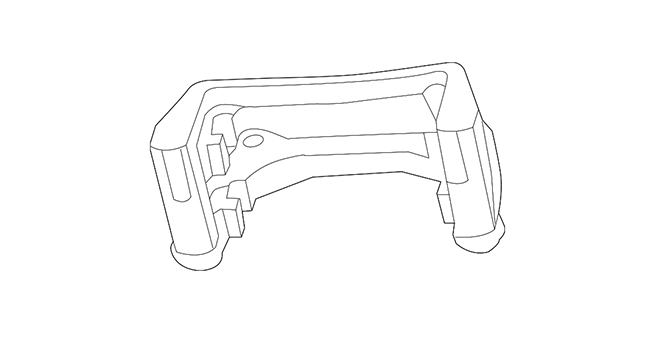
Disc Brake Caliper

Disc Brake Caliper

Disc Brake Caliper

Disc Brake Caliper

Disc Brake Caliper

Disc Brake Caliper
No results found for "brake caliper, brake calipers". Here are some helpful search tips:
- Search by a part name. Example: water pump.
- Be less specific. Example: brake instead of ceramic brake.
- Remove information such as make, year or model.
- Can't find the part you are looking for? Contact us and we'll find it for you!